Interpreter & advisor · iPhone

The interpreter
on your side.

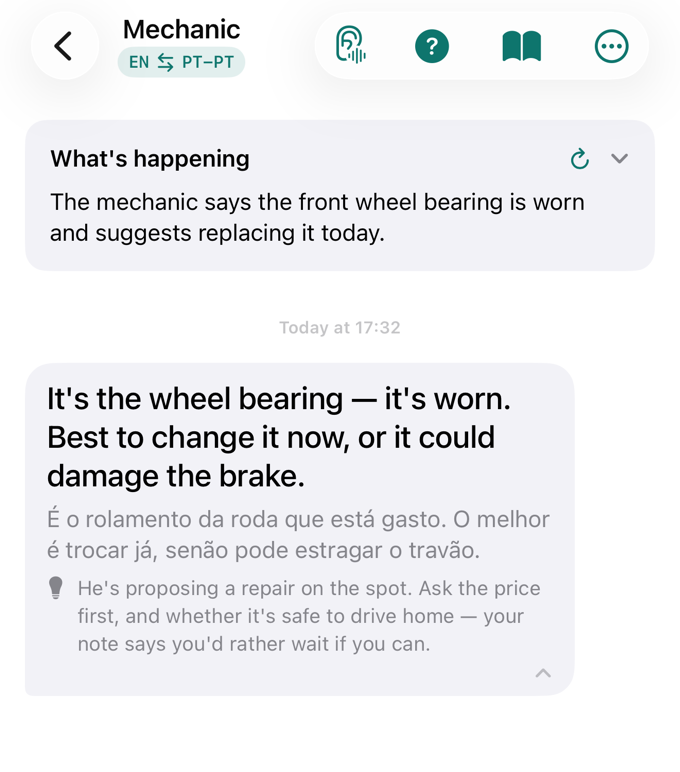
Tell Tolka the situation — the doctor, the tax office, the landlord. Turn the phone around and they read their own words as they speak. Turn it back and you get the translation, what they actually mean, and what to say next.

  • First 30 translations free — no account, no card
  • Audio is never stored. Conversations stay on your phone
  • From $7.99 for a week. Every plan is the whole app
Live on screen
They see their own words
Advice
Checked against your situation

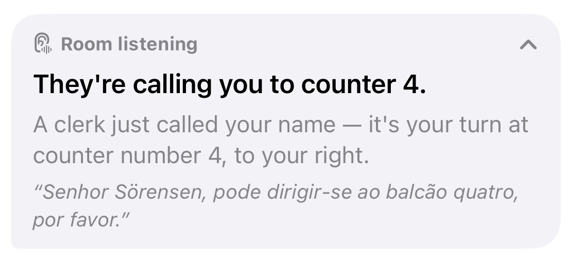
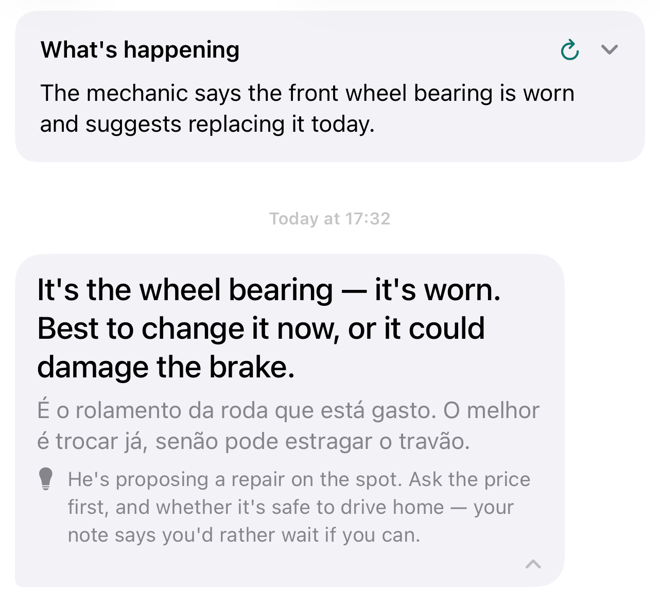
Recorded in the app. They speak, you understand, you answer — and when it matters too much, it says so.

It knows your situation

You tell it where you are and what you need. Translations and explanations fit the moment — a maternity ward and a market stall don't speak the same way.

Both sides see it working

The other person watches their own words appear as they speak — dialect and all — and fixes what it got wrong, themselves.

It's on your side

It weighs what they propose against your situation, says plainly when something doesn't fit — and when a moment needs a professional.

The moment nobody else builds for

Turn the phone around.

Every other app assumes the other person will cooperate with a machine they cannot read. Tolka gives them a screen of their own — in their language.

Their screen. Their language. Their words, large.

  1. 01

    Nothing on it but their own words

    No briefing, no translation, no advice, no buttons that might worry them. A stranger holding your phone should see one thing: what they just said, big enough to check at arm's length.

  2. 02

    Written in their language, not yours

    The buttons a pharmacist reads say Corrigir um erro, not “Fix a mistake”. Tolka translates its own interface once per language and remembers it — an English “Done” helps a Portuguese nurse no more than the transcript would.

  3. 03

    They fix the mistakes — you never see them

    Misheard through an accent? They tap Corrigir and say the wrong part again. Tolka rebuilds the sentence from what it heard and what they said to fix it. The error gets caught by the one person in the room who can tell it's an error.

  4. 04

    Handing it back is the signal

    No “now press translate”. Taking the phone back ends their turn and starts the interpretation in one move — because they already told you they were finished by giving it to you.

This is why the mechanic trusts it too. And a conversation only works when both people believe the thing in the middle.

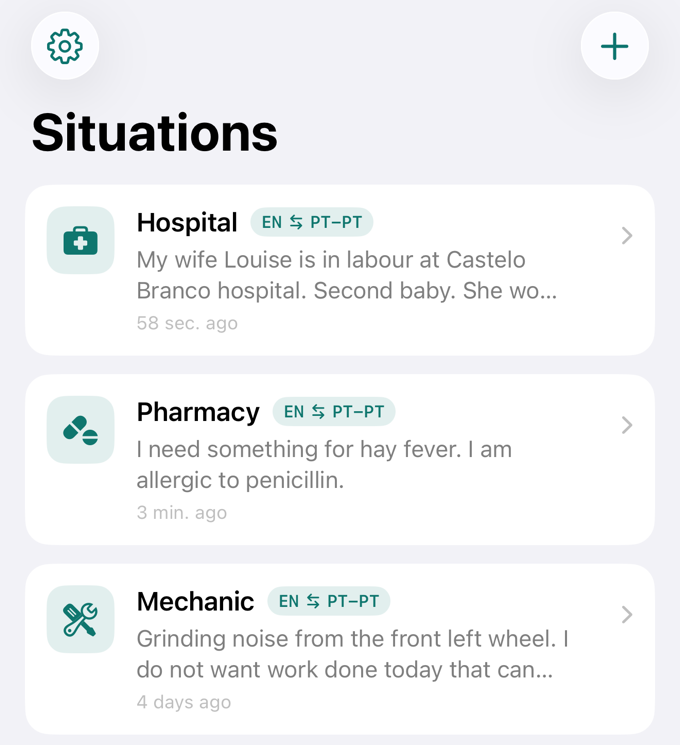
Situations, not chats

It remembers where you are.

A situation is a place and a problem, not a session that dies when you close the app. Come back next week and it still knows what the doctor said.

It spans visits

Three days in a maternity ward is one situation, not thirty conversations. Tolka knows what was said this morning — and knows it was this morning, not just now.

It keeps both halves

What you said is in the log too, with what it meant. Advice about what to say next is worthless if it doesn't know what you already said.

It argues your corner

Ask “is that a reasonable suggestion?” and it weighs what they proposed against your situation and everything said so far — then says plainly if it doesn't fit.

It hands you the next line

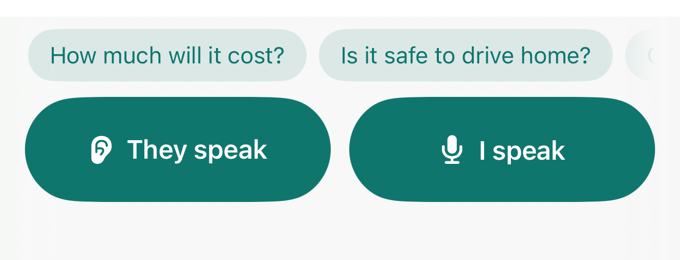
Two or three things you'd actually want to say right now, one tap each — worked out from what was just said, not from a list of polite phrases.

  • Tax office“Which form, and by when?”
  • Doctor“What is he actually telling me?”
  • Landlord“What am I signing here?”
  • School“What do they need from us?”
  • Bank“Why was it refused?”
  • Garage“Do I really need this repair?”
  • Pharmacy“How do I explain the symptoms?”
  • Town hall“Which documents do they want?”
  • Market“Just… where is the ketchup?”
Who it's for

Built for people who keep having to go back.

Tolka earns its place where the same difficult rooms come round again — not on the one holiday afternoon you needed a menu translated.

You've just moved

A whole life to set up, in a language you don't have yet

The tax office, the school, the landlord, the bank, the doctor — the same handful of rooms, over and over, each one able to cost you real money or a month of waiting. Every visit is its own situation, and Tolka still remembers the last one.

You're going with a parent

They never learned the language. Now it matters.

Sitting with a mother or father at an appointment, translating badly, guessing at what the doctor meant. Tolka gives you the words and the meaning, and tells you when it's time to ask for a real interpreter instead.

You're meeting their family

The people who matter, and no shared language

A partner's parents, a kitchen table, and the strong wish not to be talked about in the third person. Turn the phone around; they see their own words and answer to you, not to your partner.

You're away for a week

For the one conversation that isn't a menu

Most of a trip needs no help. Then something goes wrong — a clinic, a police report, a mechanic in a town you can't pronounce — and it becomes the only thing that matters that day.

The difference

Google Translate is fine for a menu.

And a chat assistant is fine at your desk. Neither of them is standing in the room with you.

A translation app

Google Translate, Apple Translate, DeepL

  • Translates the sentence. You work out what it meant.
  • The other person stares at a screen they can't read.
  • A mishearing becomes a mistranslation, silently.
  • Forgets everything the moment you close it.
  • Never tells you this is above its pay grade.

A chat assistant

Asking ChatGPT or Gemini to help

  • You type the situation out again, every single time.
  • You cannot hand your chat history to a nurse.
  • Yesterday's appointment is buried under yesterday's other questions.
  • Prompt-writing, in a waiting room, under stress.
  • Confident in exactly the moments it shouldn't be.

Tolka

Built for the room you're standing in

  • Translates, then tells you what they mean and what they need from you.
  • Turn it around — they read their own words, in their own language.
  • They catch the mishearing themselves, before it is ever translated.
  • Situations persist. Yesterday's consultation is still there, and dated.
  • Two taps. No prompt to write, nothing to scroll past.
  • Says “get a professional interpreter” when the stakes are real.
Pricing

Pick the shape of your stay.

Not how much you think you'll use it — nobody can guess that before their first conversation. Two weeks costs more than a month, and eight months costs more than a year, so the right plan is usually the obvious one.

Week

$7.99per week

A holiday, or a work trip

Cancel any time, in Settings. One tap, no email to write.

Get Tolka

Month

$14.99per month

A longer stay, or a posting

Cancel whenever. The hard months are the ones it is for.

Get Tolka
Save 23%

Year

$139per year

Living abroad

Works out at $11.58 a month.

Get Tolka

Every plan is the whole app — nothing is held back on the cheaper ones. Fair use is about 200 translations a day, and if you reach it, translation keeps working. The first 30 are free, with no account and no card, and every plan renews until you cancel it.

Why you can trust it

Tolka can be wrong.

That is why it is built the way it is:

  • The other person sees their own words live and corrects them on the spot, in their own language.
  • Every phrase you show comes with a literal back-translation, so you know exactly what you are holding up.
  • When it isn't sure, it says so — a confident-sounding wrong answer is the worst thing this app could do.
  • When a moment could really cost you — consent, a diagnosis, police, a contract — it says plainly: get a professional interpreter.
  • Audio is never stored. Conversations stay on your phone. No account, no login, delete anytime.

And it stays quiet the rest of the time. A warning that fires over antihistamines teaches you to ignore the one that matters, so Tolka escalates on consequence, not on topic. Buying cough syrup is not a medical emergency — that is exactly what the app is for.

No translation app does this. We think that is exactly why you will trust the one that does.

Why Tolka exists

Born in a delivery room

Tolka started in a maternity hospital in Portugal. A Danish couple, a room full of European Portuguese, and decisions that could not wait for the words to catch up. The app that got built that week did not just translate — it explained what was happening, what the staff needed, and when it was time to ask for a real interpreter.

That is still all it tries to be: the friend who speaks the language and stands next to you.

Straight answers

Questions worth asking

Does the other person need the app?
No. They need about four seconds and a screen pointed at them. Everything they read is already in their language, and the only two buttons say “done” and “fix a mistake”.
Does it work without a signal?
Speech is transcribed on the device, so their words still appear live on screen. The interpretation and the advice need a connection. Download your language over wifi before you travel — not in the waiting room.
Which languages?
You pick a pair per situation: your language, and theirs. The list comes from what your iPhone can transcribe on-device, which today means Europe is well covered and parts of Asia are not. Portugal is where it is sharpest today — real European Portuguese, never Brazilian forms quietly substituted for it.
Is my conversation stored anywhere?
Audio is never written to disk, ever — it is transcribed and discarded. Transcripts stay on your phone, in the situation they belong to, until you delete them. No cloud, no analytics, no account to create.
Can I rely on it for something serious?
No — and it will tell you so itself. For consent, a diagnosis, a legal matter or a large sum, Tolka stops and recommends a professional interpreter. It is built for the other ninety-five per cent of a life lived in another language.
Why not just use ChatGPT?
You can, and for a single sentence it works. It falls apart in the room: you cannot hand your chat history to a nurse and have her read it, you re-explain your situation every time, and it will never tell you to go and find a human interpreter instead.
iPhone only?
For now, yes. Tolka leans on the iPhone's on-device speech recognition, which is what keeps audio off the internet entirely.
Can I try it before paying?
Yes. The first 30 translations are free, with no account and no card. That is a real errand — enough to find out whether handing someone your phone actually works, which is the part you cannot judge from a screenshot.
What is the fair-use limit, really?
About 200 translations a day. It exists to bound the one pathological case, not to sort customers — a heavy expat using Tolka every day of the week lands around a third of it. If you are wondering whether you will hit it, you will not.
What happens if I do reach it?
Nothing that could hurt you. Translation keeps working; the optional extras — the briefing refresh and the suggested replies — pause first, and you can top up. Cutting off an interpreter in a pharmacy to protect a margin would be a far worse failure than the cost of not doing it.

The next difficult room

You already know which one it is.
The first 30 translations are free.

Get Tolka